Festa del Corpus Domini
The Corpus Domini Festival is linked to the event that made Bolsena famous worldwide: the Eucharistic Miracle that celebrates the living presence of Jesus Christ in the Eucharist.
Remembered and venerated as the eucharistic miracle par excellence, the Eucharistic Miracle occurred in 1263 in the Basilica of Santa Cristina when a Bohemian priest, one Peter of Prague, doubting the real presence of Christ in the Eucharist, witnessed at the words of consecration the flow of blood from the Host he held in his hands.
Drops of blood stained the Corporal, the linen cloth used for the altar, and the stone steps. The priest, troubled and confused, interrupted the celebration and fled from the Basilica to Orvieto to tell Pope Urban IV what had happened.
After hearing the priest’s account, the Pope sent bishops to Bolsena to verify the episode. Once on site, the bishops confirmed the truth of the miracle and brought the blood-stained corporal to Orvieto, where it is still preserved today inside the Cathedral.
In Bolsena, the Stones, witnesses to the event and stained with the same blood, became objects of veneration and are preserved in the “Chapel of the Miracle” inside the Basilica, as a tangible sign of the Church’s Miracle. There are four in total, and one in particular is left on display all year round: “The Sacred Stone,” carried in procession through the streets of Bolsena adorned with flower carpets on Corpus Domini day.
The miraculous event of 1263 had a significant impact on the Catholic Church and contributed to the institution of the Corpus Domini feast. In 1264, Pope Urban IV, moved by this Miracle, issued from Orvieto the “Bull Transiturus” with which he extended the Feast of Corpus Domini to all of Christendom. An unexpected event later brought the institution of the Corpus Domini procession to Bolsena.
In 1811, the Papal States were in French hands. The Pope himself was forced to leave Rome, and with him the bishops abandoned their dioceses and the clergy their parishes and monasteries. Bolsena’s fate should have been the same. However, Father Master Francesco Cozza, the sole representative of the local clergy, remained at his post, accepting to sign obedience to the new imperial master. He knew that to save the Collegiate Church from suppression, he had to demonstrate that it housed a famous relic. On his own initiative, with the support of the population, he organized the extraction of one of the Marble Stones of the Miracle.
After placing it in a crystal case and positioning above it the sphere of the Monstrance containing the consecrated Host, on June 16th he had it carried solemnly in procession amid communal rejoicing, along a route festively decorated and completely covered with flowers. This event helped favorably and the Collegiate Church of Bolsena was not suppressed.
In 1814, when Bishop Lambruschini of Orvieto returned (initially reluctant) and verified the people’s insistence, on May 28, 1815, he himself took part in the solemn procession, thus inaugurating its institution.
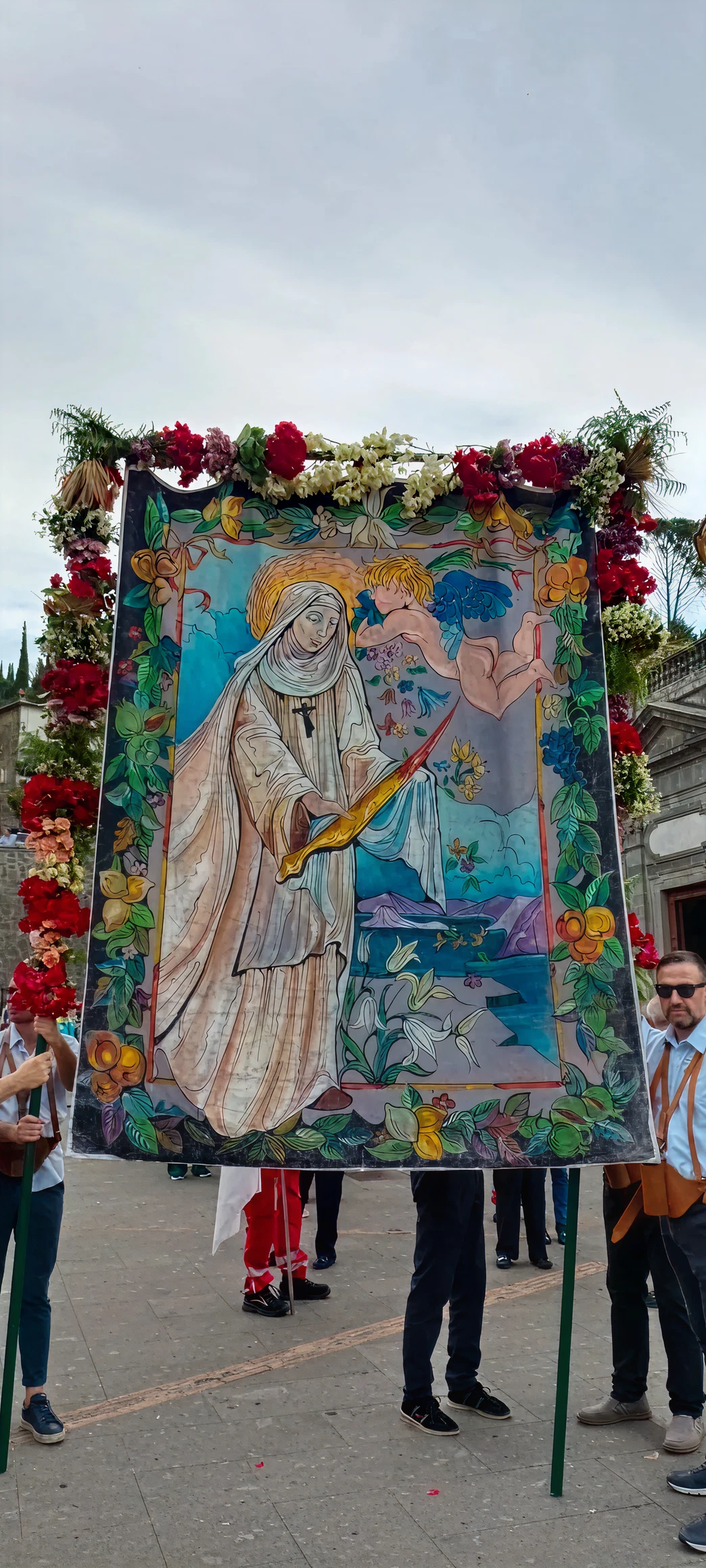
Since then, every year Bolsena solemnly celebrates the feast of Corpus Domini, keeping alive that faith and that impulse of outward jubilation by adorning the Stone’s path with a carpet of fragrant flowers gathered from the surrounding countryside by a population committed to enriching with colors and fragrances the passage of the Reliquary and the Blessed Sacrament.
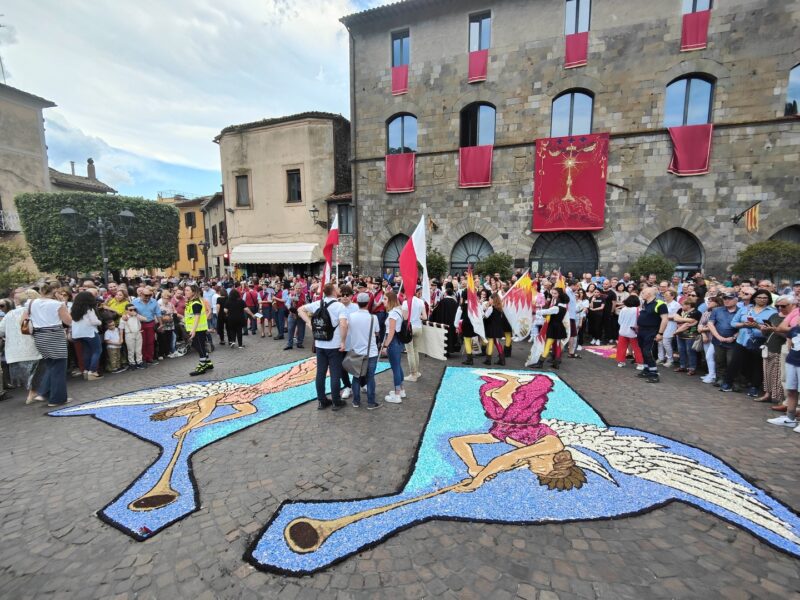
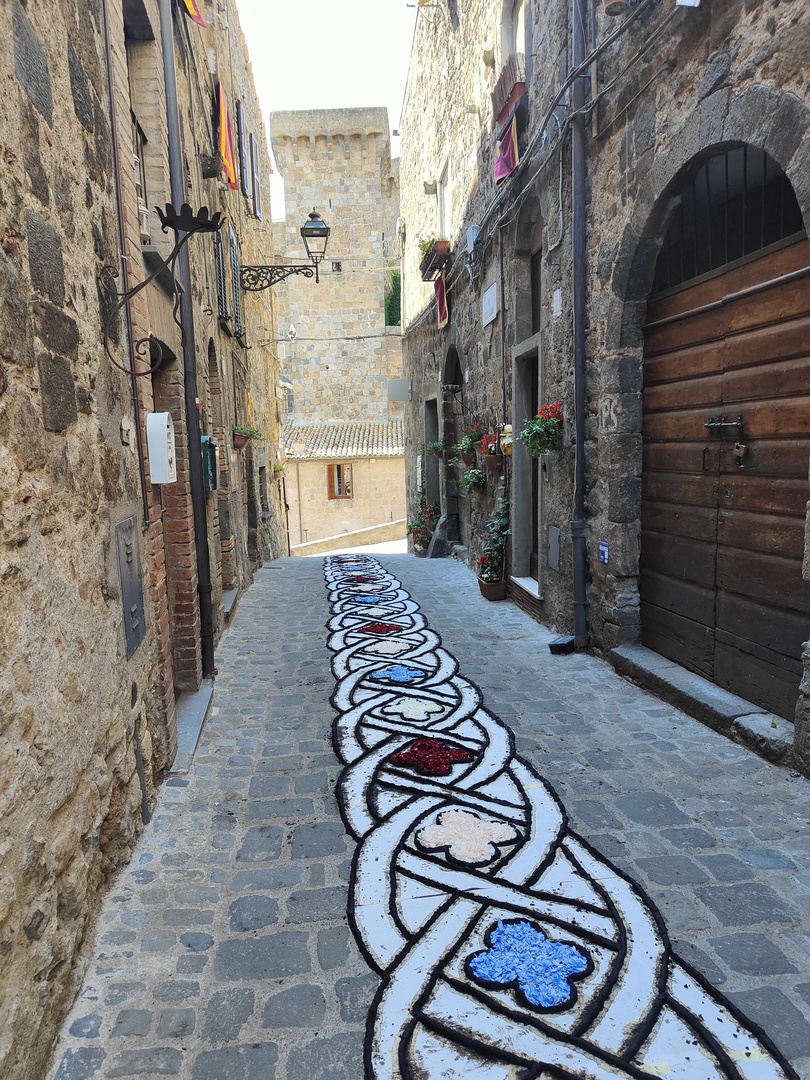
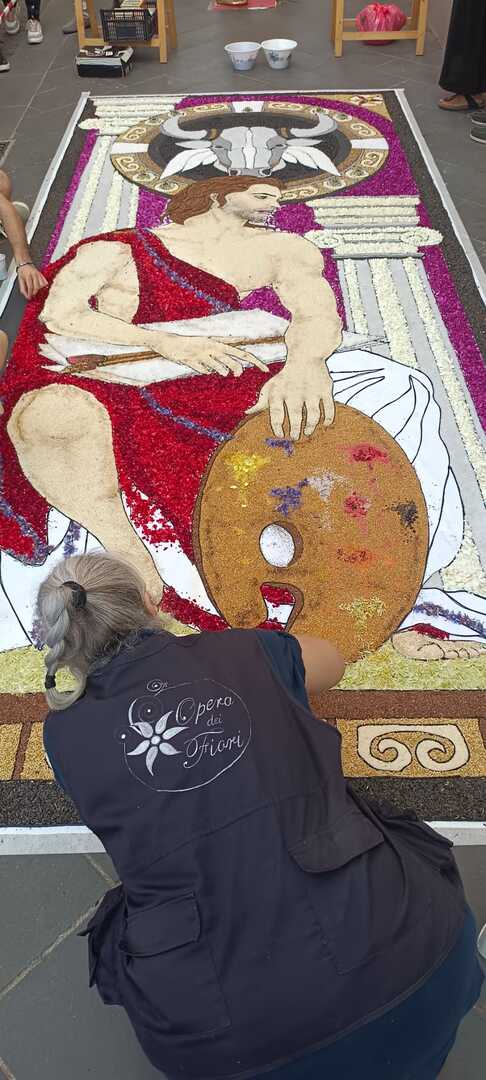
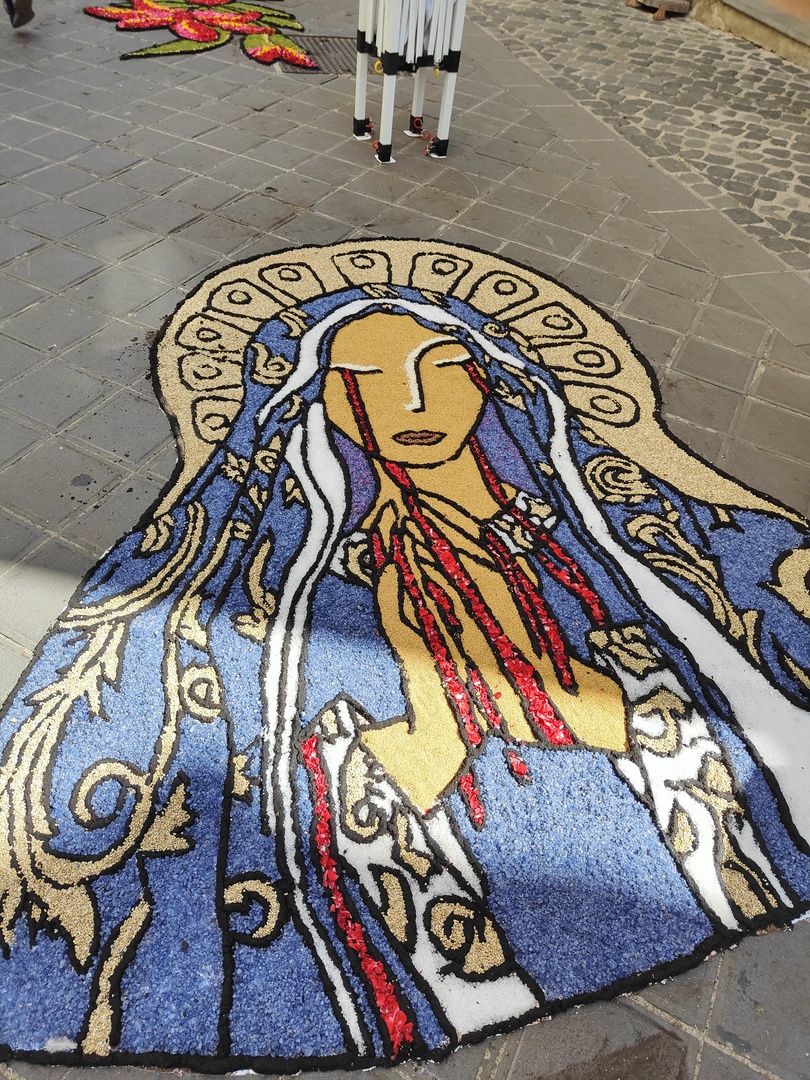
Everywhere, even through the narrow alleys of the Castello quarter, there is a carpet skillfully composed in designs and color combinations. This carpet is called: INFIORATA.
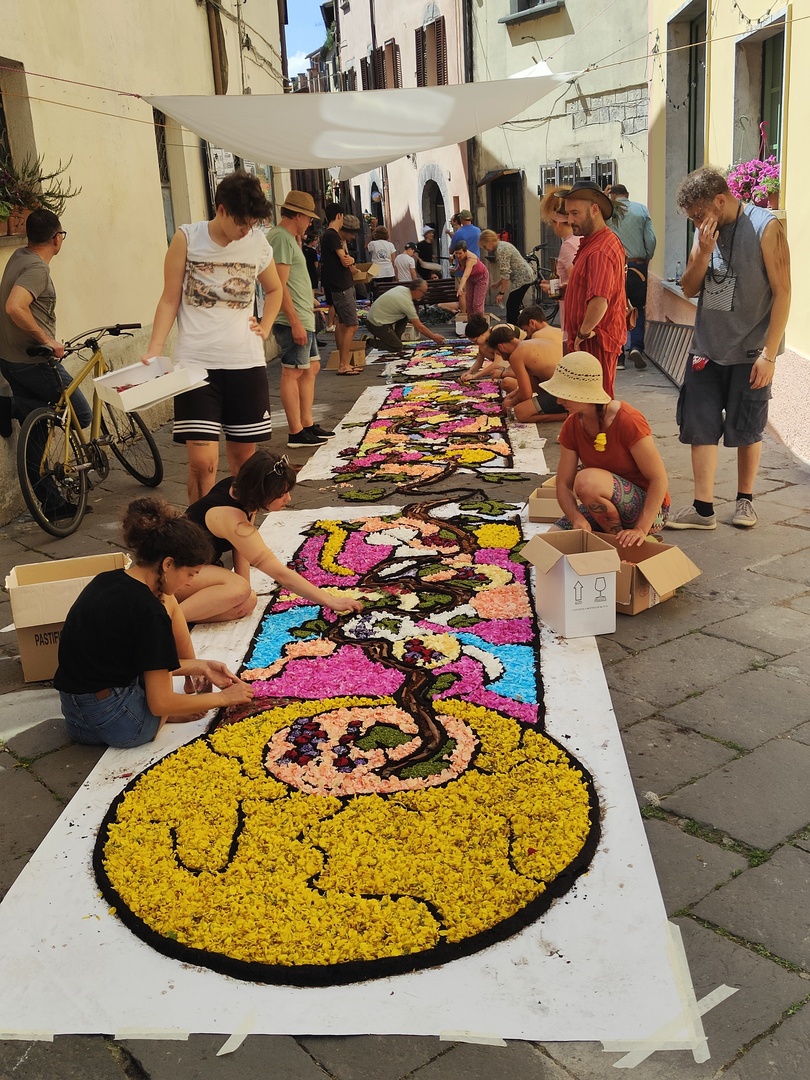
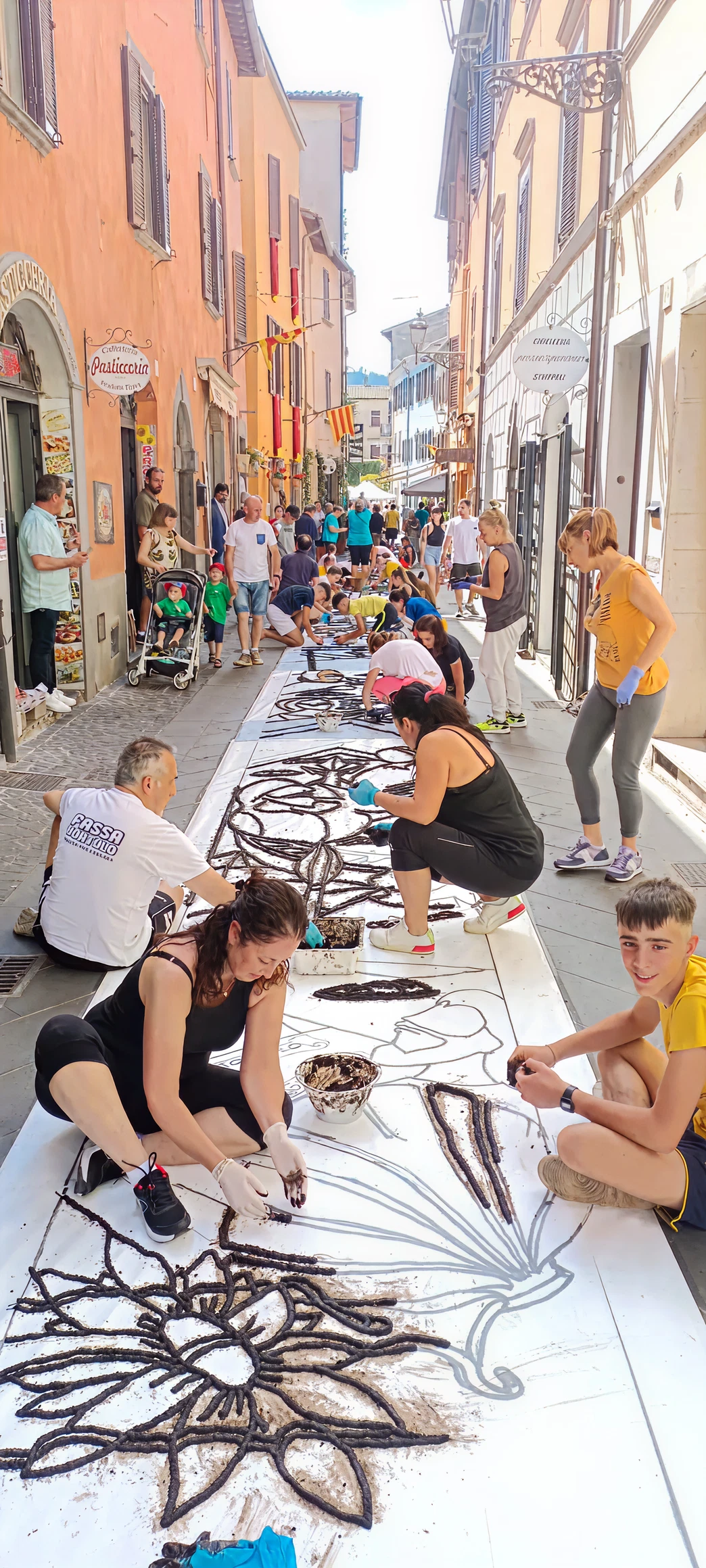
The preparation of the infiorata involves the entire population of Bolsena, with the “Master Flower Artists” working with dedication and passion. The inhabitants of Bolsena of all ages begin collecting and preparing flowers days before.
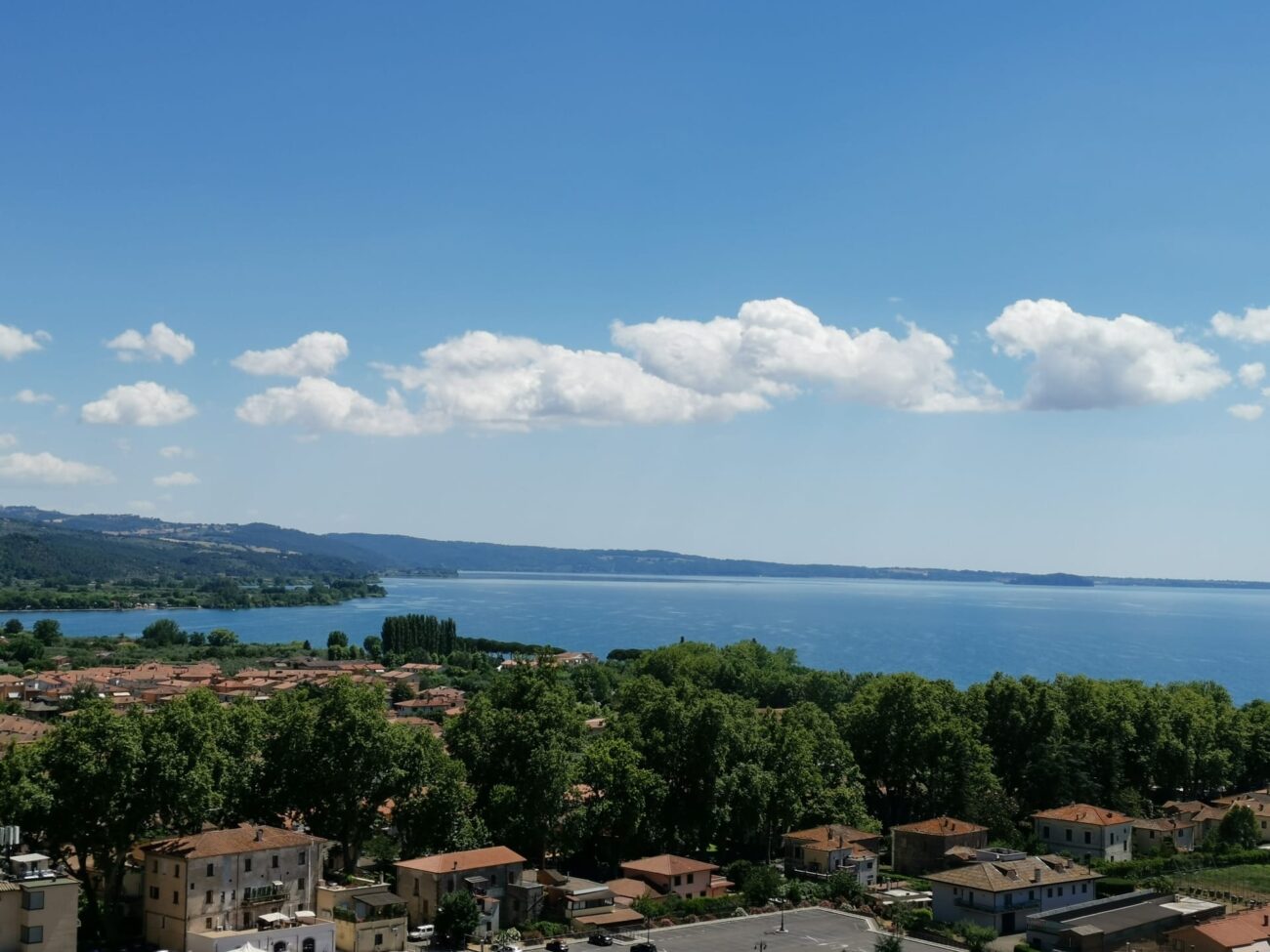
For some more precious and delicate species, collection is even carried out at first light on the day of the feast itself. There is a true general mobilization: substantial teams of “Flower Artists” disperse into the countryside around the lake, through the fields and valley plains in zealous search of the “colors” to use in the design: yellow, green, white, purple…
The designs generally represent scenes, symbols, geometric figures or images freely drawn from famous paintings. The creation technique consists of executing the design on paper or directly on the pavement with chalk; then the outlines of the design are covered with peat or coffee grounds. Finally, flower petals are placed in the spaces, usually positioning them “petal upon petal,” and they are kept moist by frequently spraying them with water.
The practical and actual work of creating the carpets begins at dawn on Corpus Domini Sunday or during the night and lasts throughout the morning and early afternoon. In the late afternoon, at the end of Holy Mass, the designs on the streets will be ready to be crossed by the Sacred Stone, carried on the shoulders by the “Men of the Sacred Stone.”
In addition to the Procession and the Infiorata, the feast often includes side events such as exhibitions, historical reenactments and musical performances.