Palazzo Cozza Caposavi
With over five centuries of history, it is the largest private art collection open to the public in the province of Viterbo.
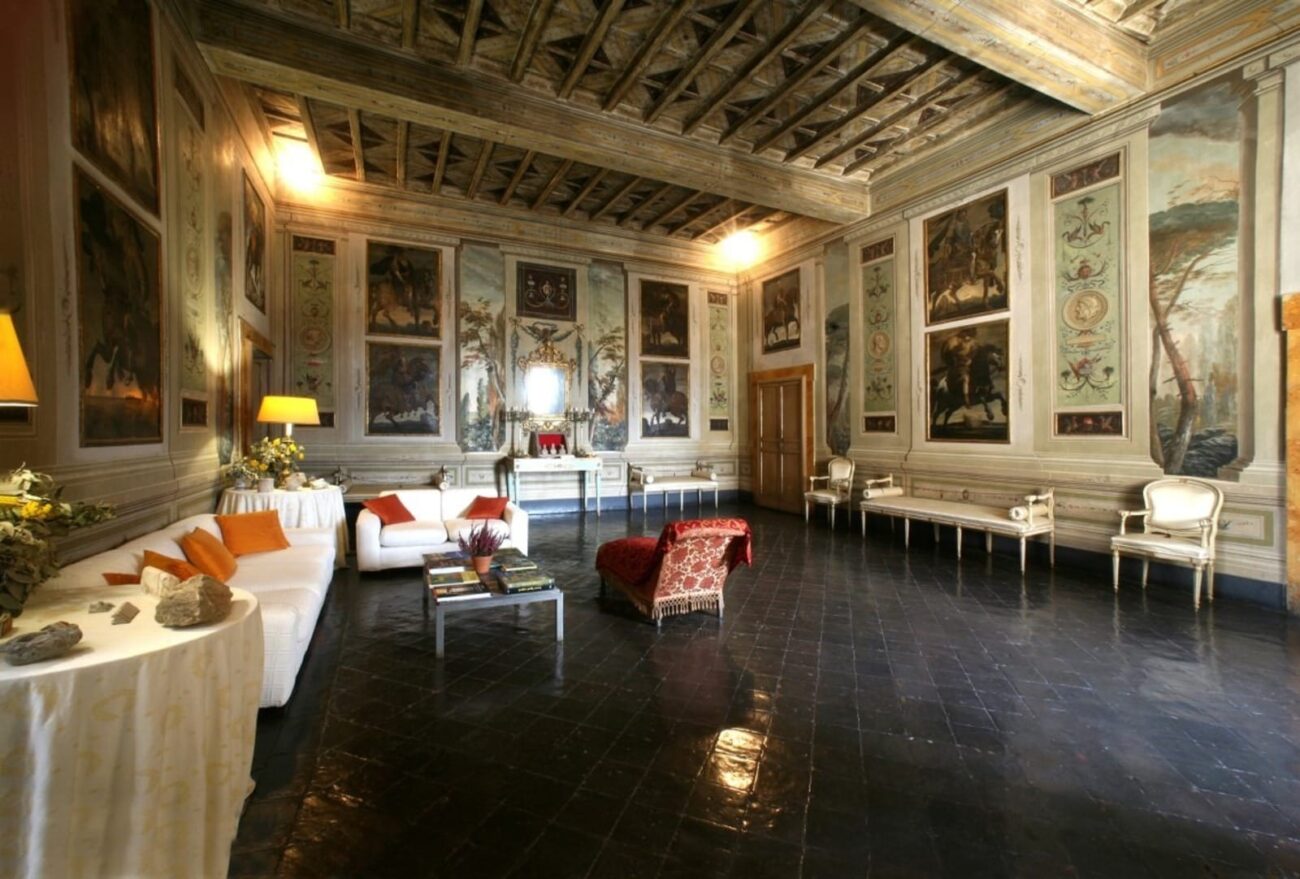
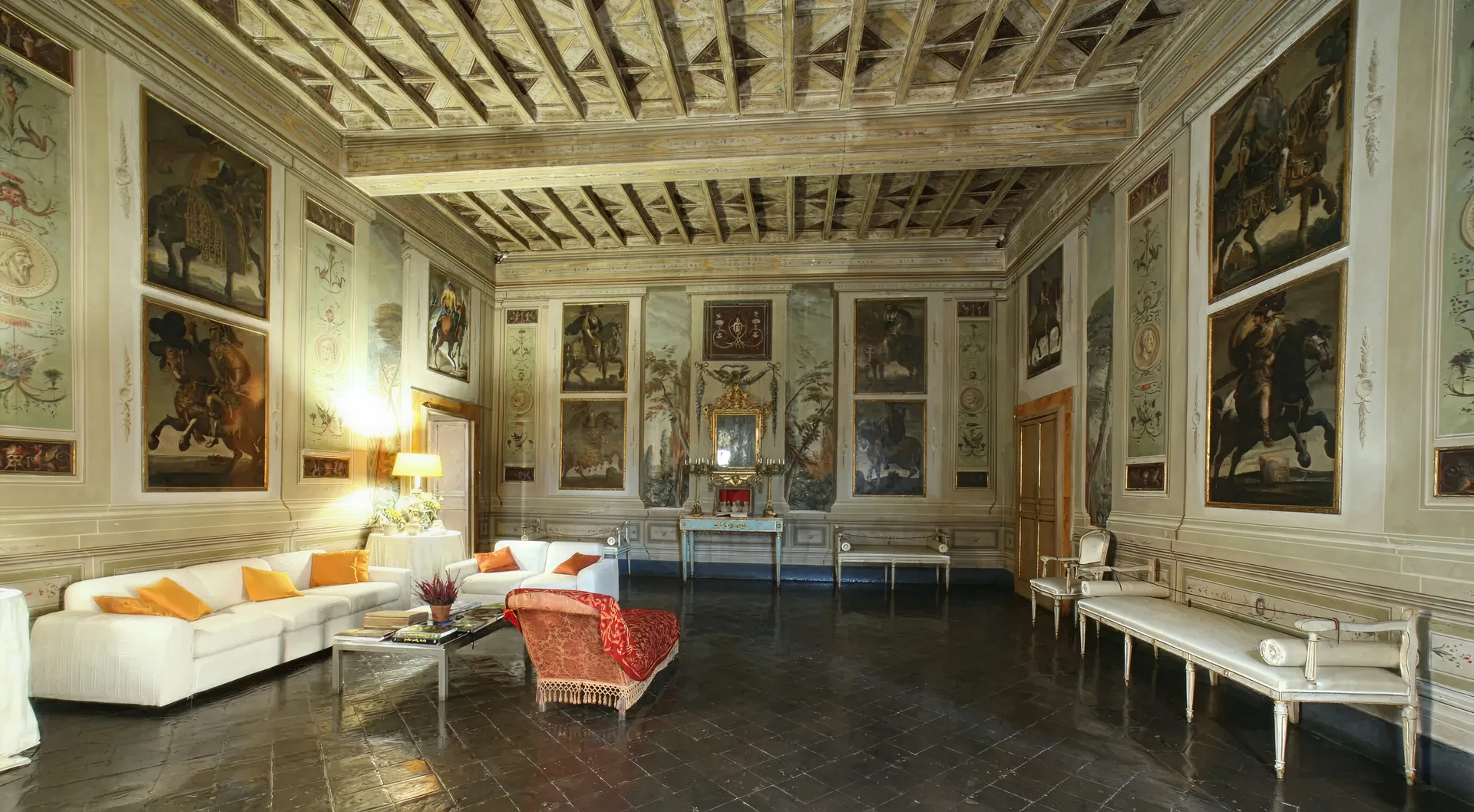
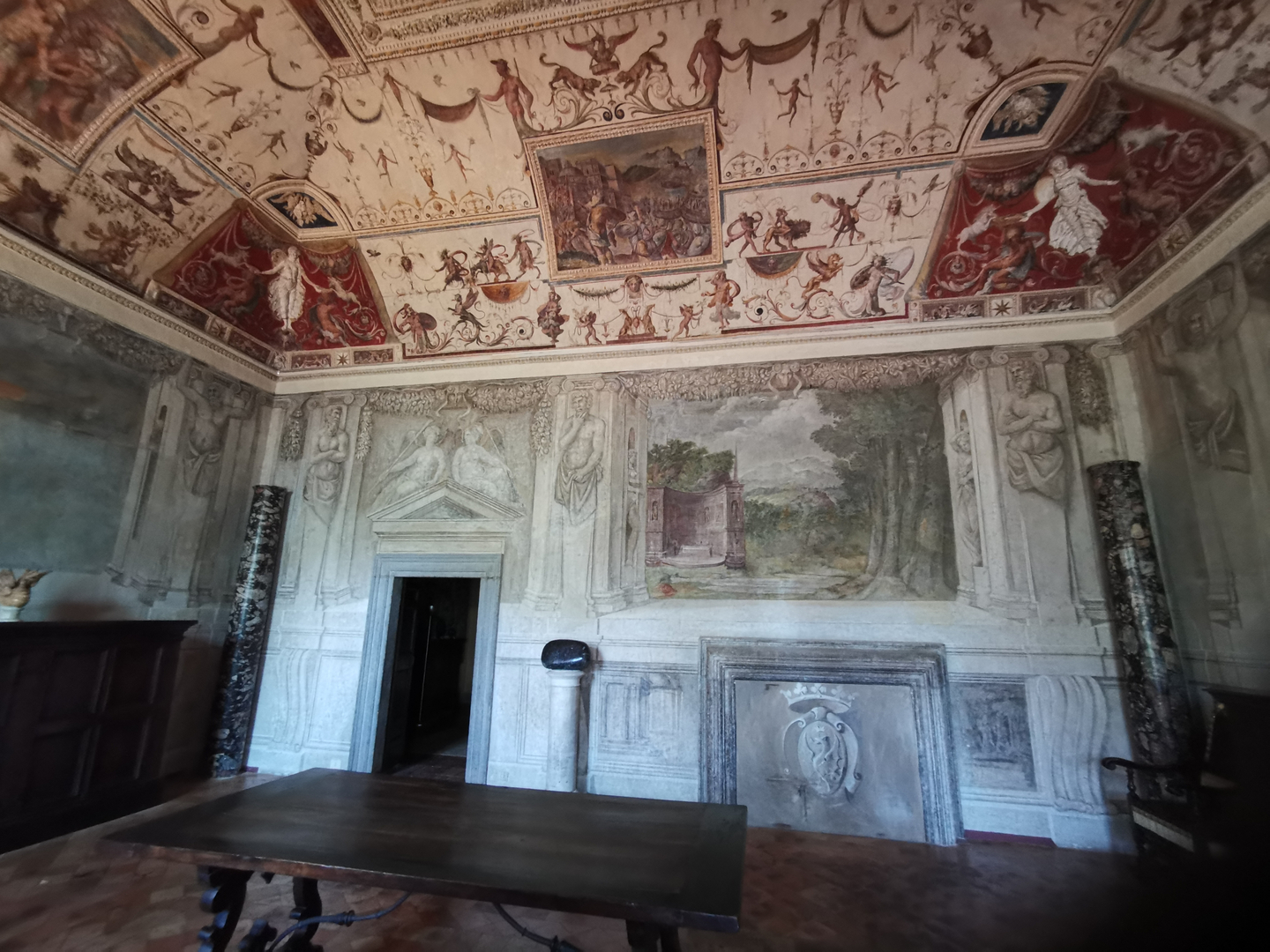
Palazzo Cozza Caposavi boasts a history spanning over 500 years. It is currently the largest private art collection open to the public in the entire province of Viterbo. Belonging to the Cozza Caposavi Count family, the palace is a living monument that bears witness to the elegance and prestige of its long heritage.
The museum tour will take you through the ages, allowing you to explore rooms that have hosted several illustrious figures, including Stendhal, Fellini, Marconi, and Verga, and welcomed members of European royal families and distinguished travelers. During your visit, you will be accompanied through a detailed narrative. Photography is welcome, but we kindly ask you to tag VesConte-Palazzo Cozza Caposavi in your posts. The Count’s Palace is a treasure shared with the community, and we hope your visit is full of discoveries and beauty.
VISITING HOURS: 10:30 AM-12:30 PM / 3:00 PM-6:00 PM
THE HISTORY
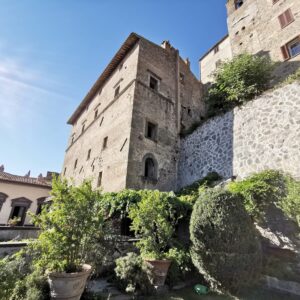
In the 16th century, the entire Viterbo territory was under the direct influence of the Farnese family, to whom we owe the construction of important palaces such as Villa Lante in Bagnaia and Villa Farnese in Caprarola. Palazzo Cozza Caposavi was erected around 1561 at the behest of Cardinal Tiberio Crispo, governor of the Papal States in Bolsena, son of Silvia Ruffini, a widow who became the concubine of Alessandro Farnese, the future Pope Paul III.
After the cardinal’s departure from Bolsena, the Palace was divided between the Cozza and Caposavi families and remained so until the 18th century, when the two families united in marriage, reunifying the palaces into the original form conceived by Crispo. The residence remained united until the 1930s, when Nicola Cozza sold the part facing the Rocca to Rodolfo del Drago, who already owned a disused building in the castle district, “il ganarone,” inherited from the Spada Princes and which would only be incorporated into Palazzo Cozza at the beginning of the 20th century, becoming the current complex known as “del Drago.” From then on, the two buildings would once again be divided.
The palace was not the family’s main residence, but rather the nerve center of agricultural administration and holdings between Orvieto and Bolsena. Despite the influence and power the family exercised for about 500 years over the town, producing figures of primary importance in its administration, as Guidotti reports in his writings, “the Cozza Caposavi Count family never had feudal ambitions over the territory.” Indeed, Francesco Cozza’s donation to the Bolsena community of approximately 700 hectares of land occurred before the agrarian reform, allowing the people of Bolsena to alleviate the hardships of the two world wars.
BOLSENA, A PLACE OF PASSAGE
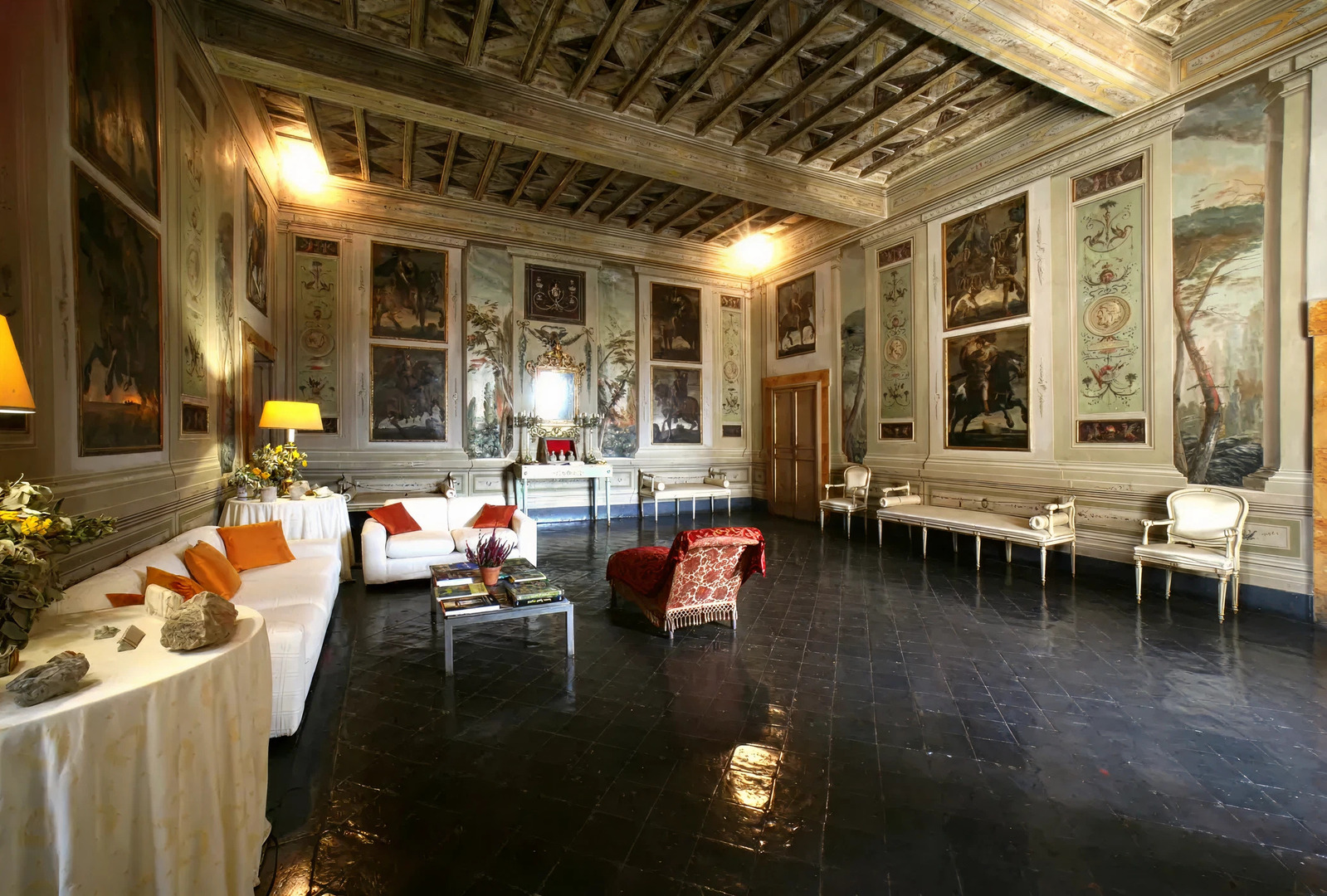
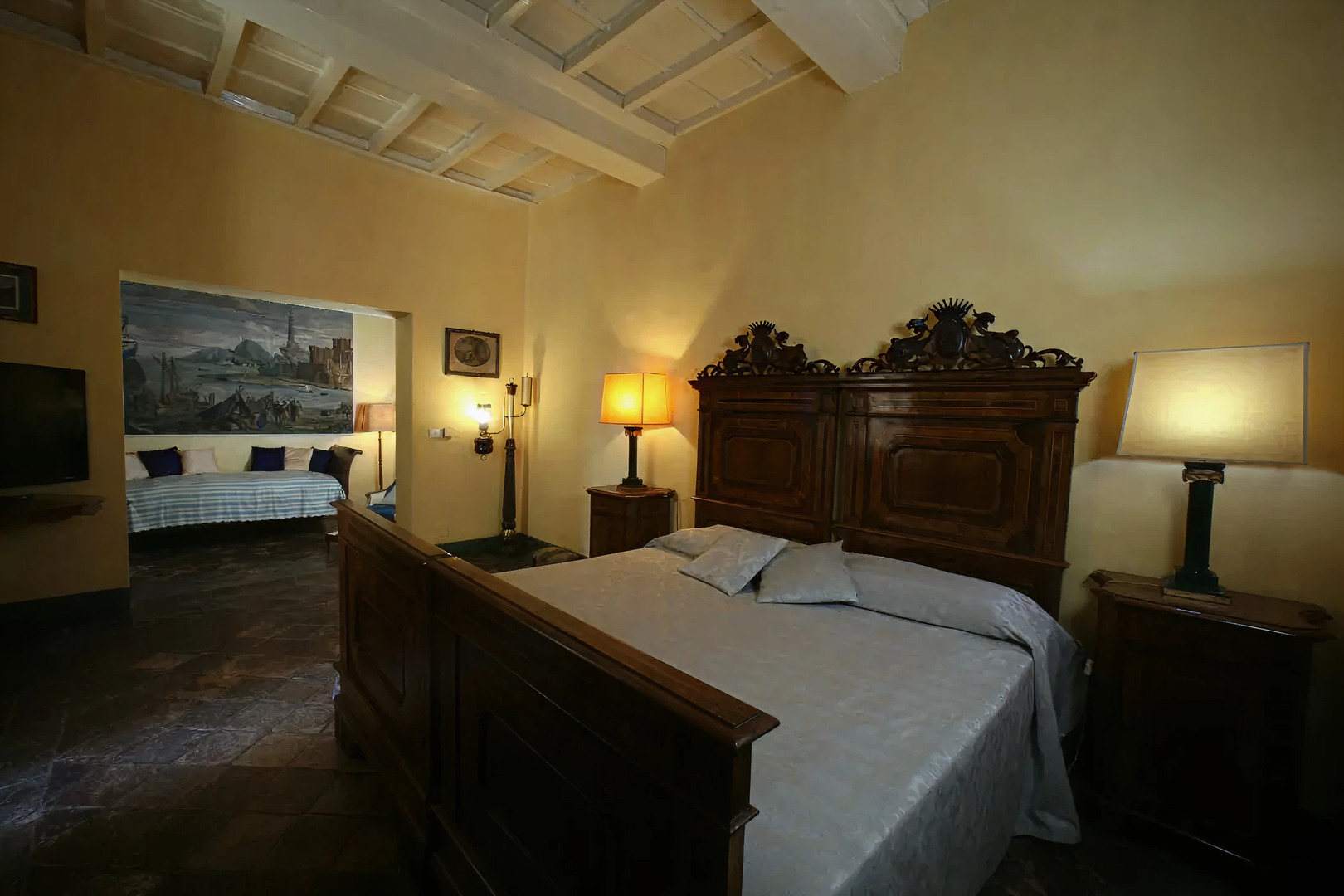
The palace’s non-residential purpose saved it from all the interventions fashionable in subsequent centuries, preserving in its original state much of the furniture, as well as the decorations and terracotta floors. A notable feature of the palace is the library collection of over ten thousand volumes, from the 16th century to the present day, including many first editions autographed by figures who passed through the palace, such as Giovanni Verga or Gabriele D’Annunzio. There are also travel books, books about the territory, on Italian and European heraldry, and some curiosities including the first dictionary of the Italian language.
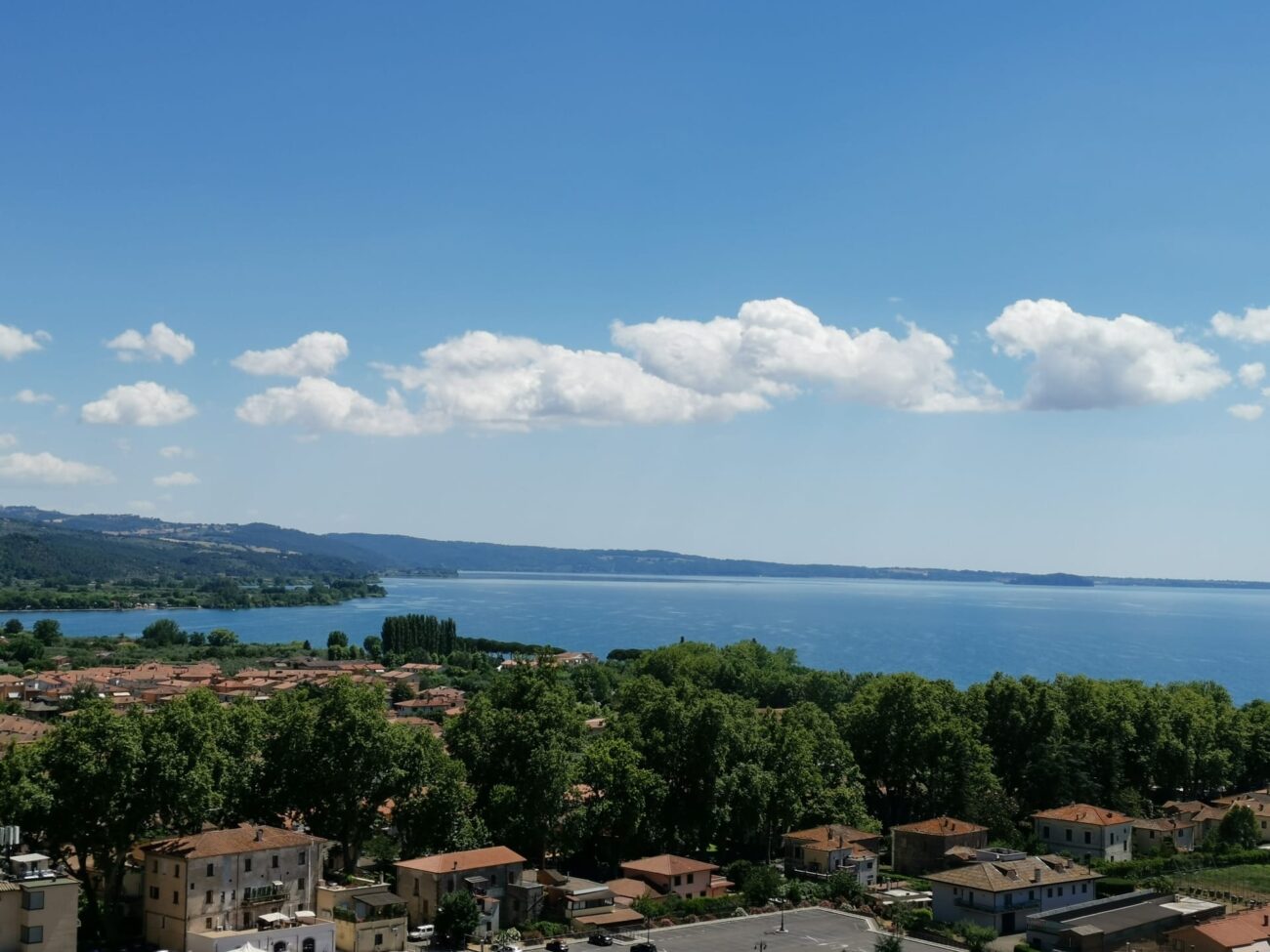
It should be remembered that Bolsena has been for centuries a mandatory stop for travelers in central Italy. When the highway did not yet exist and the Via Cassia was the main road between Tuscany and Lazio, the post stations and horse changes were either in Bolsena or Radicofani. Therefore, Grand Tour travelers often passed through this territory and were frequently guests of the palace. The palace was frequented by European royal families and figures from all sciences and arts, including Prince Carlo Ludovico of Bourbon, Stendhal, Giovanni Verga, Guglielmo Marconi, Federico Fellini, two popes, and many others. Not only that: the Via Francigena also passes through here, of which Bolsena is one of the most important cities due to the Eucharistic miracle.
This intense coming and going of illustrious figures persisted strongly until the first half of the 20th century, until, with the construction of the Autostrada del Sole, Bolsena was bypassed in favor of nearby Orvieto.
In the 1970s, Plinio de Martiis, a famous Roman gallery owner, rented a country farmhouse from the Cozza Caposavi family every year. Following him were young artists who would soon become famous: Alberto Burri, Tano Festa, Mario Schifano, Franco Angeli, Cy Twombly, who created works entitled “Bolsena” right here. As Lorenzo Cozza Caposavi recounts: “One day Plinio, not having the money to pay the rent, proposed to pay the monthly fee with a painting by an American author unknown at the time, Cy Twombly. The painting was called Bolsena, but instead of depicting the lake, it showed a series of scribbles similar to those of a child. A bit perplexed both by the dimensions of the work and by its excessive abstractness, I told Plinio not to worry, and that he would pay at his convenience when the opportunity arose. Today that painting, which is part of a series by the same author, was sold at Christie’s for 45 million euros!”
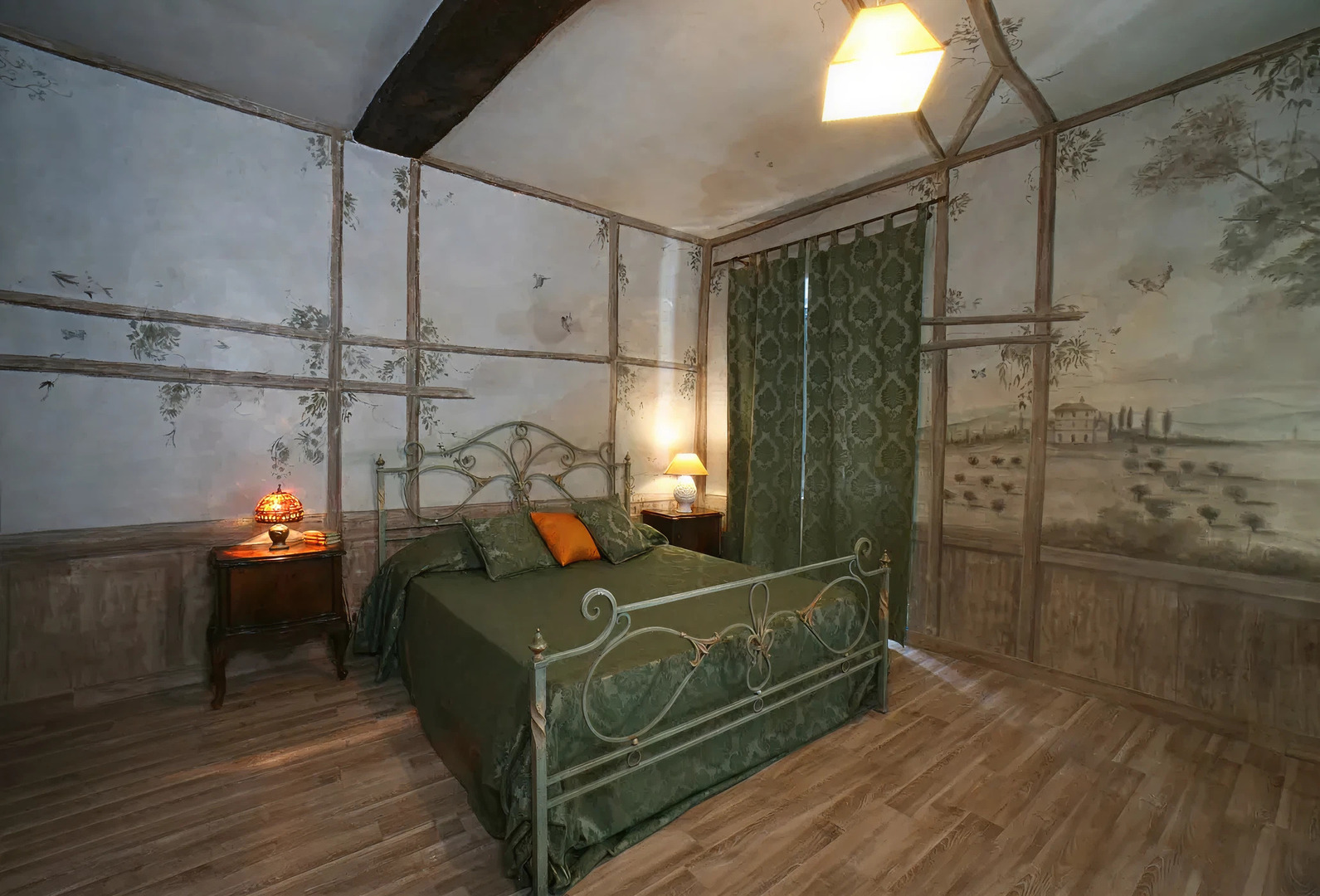
Balthus also passed through the palace, overseeing the restoration of some walls, once covered with wallpaper. The celebrated artist, a friend of the family, purchased a castle near Bolsena, in Montecalvello, while he was director of the French Academy at Villa Medici. After removing the wallpaper, he suggested using the same technique he was adopting in Rome, leading to the creation of the pattern that can still be seen today in the Chinese salon, in a bedroom called “dell’arazzo” (of the tapestry), and in the green room of the Baldacchino.