San Giovanni District: Porta Fiorentina and Chiesina dell’Arcale
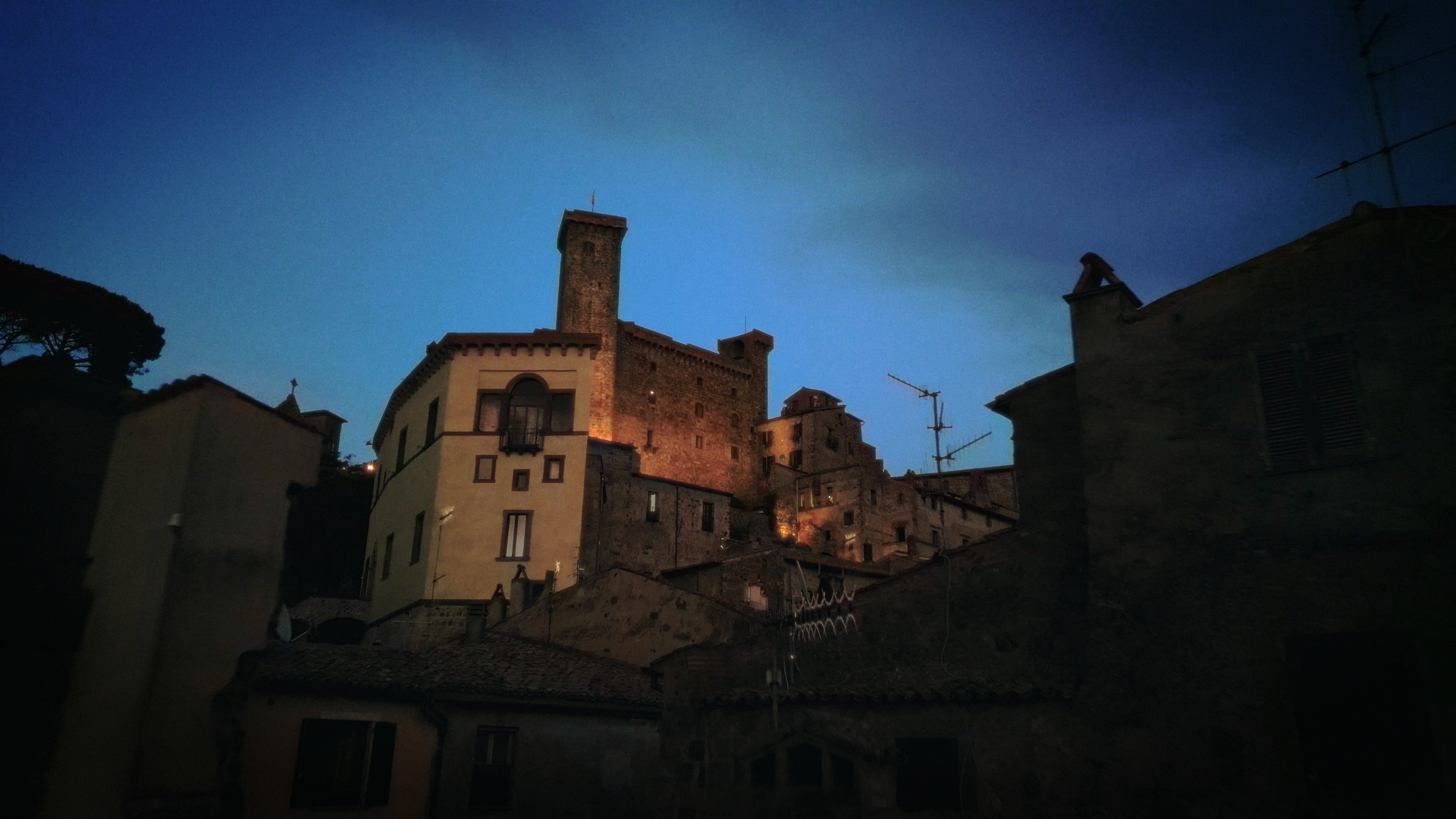
San Giovanni, the smallest district in the historic center, has its heart in the square and its symbol in the centuries-old Palazzo del Drago.
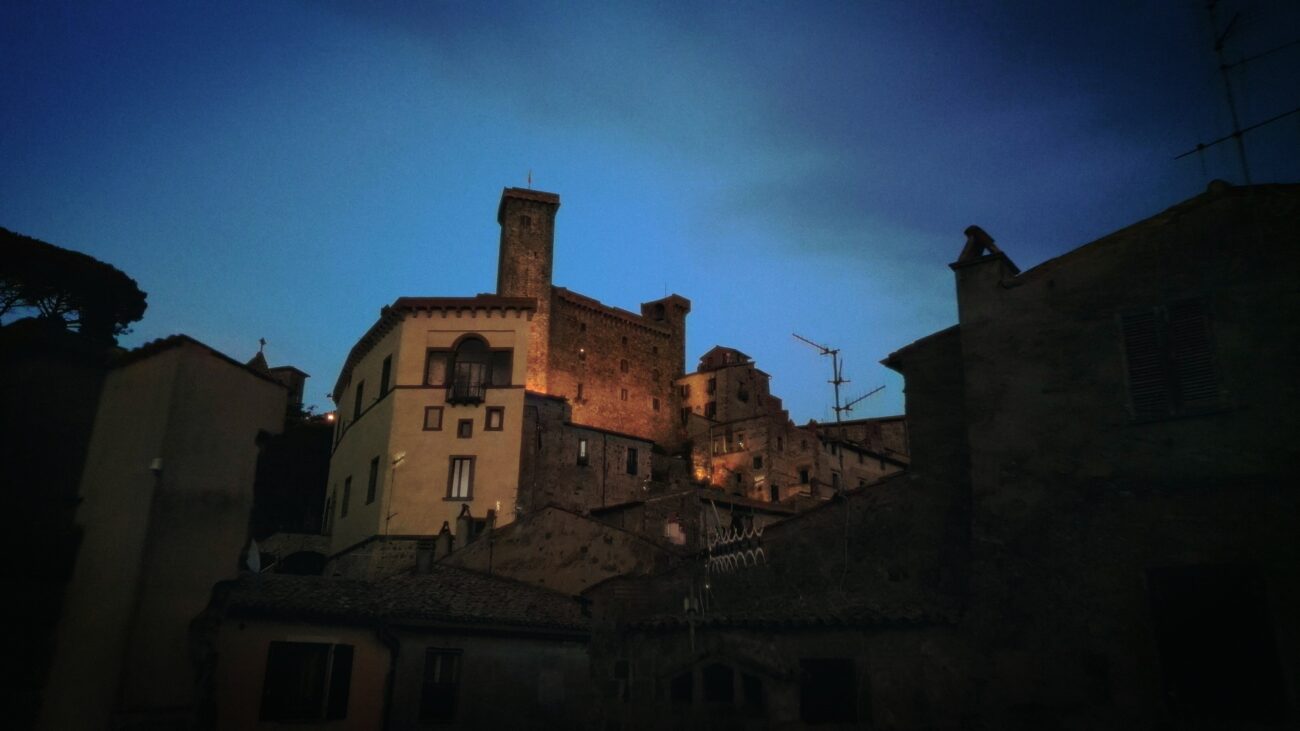
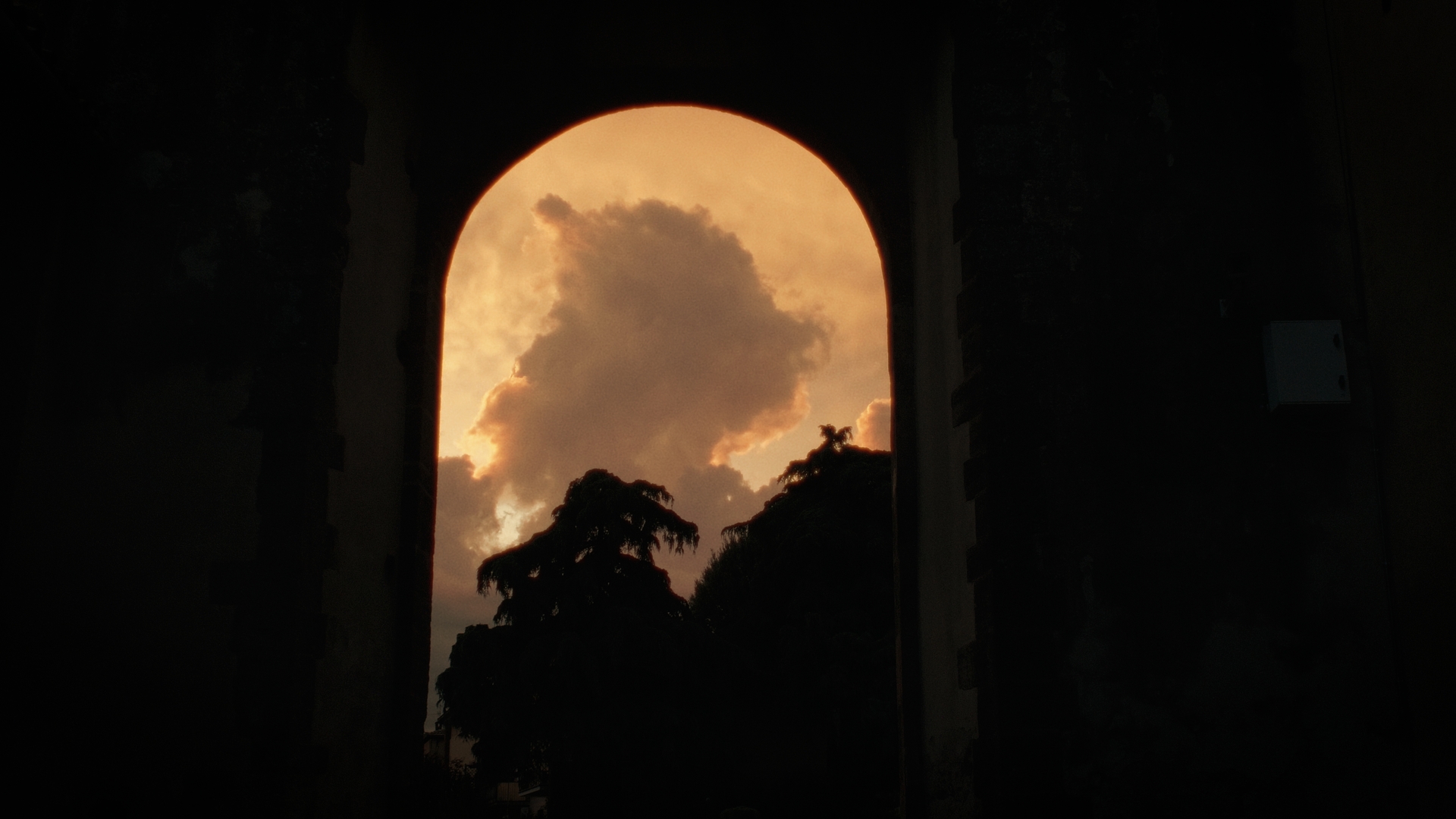
Two iconic places tell the story of Bolsena: the Chiesina dell'Arcale, linked to legends of devotion and ancient noble families, and the Arch of Porta Fiorentina, a monumental city gateway commissioned by Cardinal Tiberio Crispo in the 16th century.
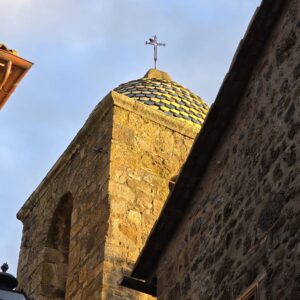
The Chiesina “dell’Arcale” was built in 1454 by a noble knight of the del Gatto Family, an ancient lineage from Viterbo. Andrea Adami, an 18th-century historian from Bolsena, states that the name del Gatto Family comes from the faithful animal of the blessed Guido da Bolsena, from whom the lineage seems to descend. It’s said that the man had a cat so devoted to him that the animal itself would fetch food for its master. When Blessed Guido died, the cat passed away with him. Hence the name del Gatto Family and the initial designation of “Church of the Madonna del Gatto.”
Over time, the building has also been known as the “Church of the Madonna della Stella” because of a painting inside, in which the Madonna was depicted with a starry cloak. The Chiesina, as reported by historian Valerio Cozza, is also known as Madonna dell’Arcale, linking the name to the arches that characterized the Roman baths located nearby, and was rebuilt by Knight Ottavio Luigi in 1783.
Later belonging to the Mazziotti Family, it was donated in 2023 to the Community of Bolsena.
The city gate, located on the main route at the exit of the Borough, heading north and therefore also called “Porta Fiorentina,” was commissioned by Cardinal Tiberio Crispo, governor of Bolsena, in conjunction with the urban planning interventions he promoted in 1556, for which he had undertaken expropriations and demolitions of some houses in the village to create a straight road connected to the opposite urban gate toward Viterbo, built later, between 1578 and 1598, designed by Ippolito Scalza.
The construction of the San Giovanni gate began in 1559, as the inscription states, using red stone from the Poggio Restaldo quarry, taken that year by the governor from a supply destined for public works. The design of the gate features simple rustication with an attic above, and shows points of contact with the portal, attributed to Simone Mosca, of the palace that Crispo had built in Orvieto, designed by Antonio da Sangallo the Younger, today Palazzo Marsciano; it’s therefore likely that the Bolsena gate was created based on a design by Mosca, active in the cardinal’s palace between 1540 and 1544.
In the gate’s attic, among the coats of arms of Tiberio Crispo, divided between the Farnese lilies and the unicorn drinking with a star on the left, and that of Bolsena on the right, stands the inscription: “Cardinal Tiberio Crispo this gate and the road from the region adorned with the temple / for the convenience and decorum of the Bolsenesi / ordered to be built / in the year of the Lord 1559.” The text thus alludes to the urban planning interventions commissioned by Crispo, which included the construction on the lakeshore, on the straightened route of the Via Cassia, of a round temple with four staircases on the sides arranged in a cruciform manner; it was begun in 1558 and the following year there are records of payments for building materials, but it was never completed: its memory remains in the local place name, still called today “il Tempietto.”
Plan Your Visit

Storyteller of the beauty, art, history and culture of Lake Bolsena and its surroundings, territories where I grew up and which I can share with the professionalism and passion of a local tour guide.
9:00 AM / 7:00 PM
Telling the story of this land is not just about unveiling secrets and frescoes, it is about returning the light that this lake and this town give me every day, with a devotion that transcends time.
9:00 AM / 7:00 PM

My teaching profession has refined my ability to communicate. You cannot teach or illustrate art and creation without sharing a passion for beauty with others. A guide is not a book—it is the synthesis of all books and meaningful experiences from which they have drawn their knowledge, in order to share history and stories with everyone.
9:00 AM / 7:00 PM
I believe being an ambassador for the place where you were born is a great privilege. Leading Italian and international visitors through the story of Bolsena's artistic, natural and cultural wonders is a stimulating experience that enriches your own knowledge while sharing it with others.
9:00 AM / 7:00 PM
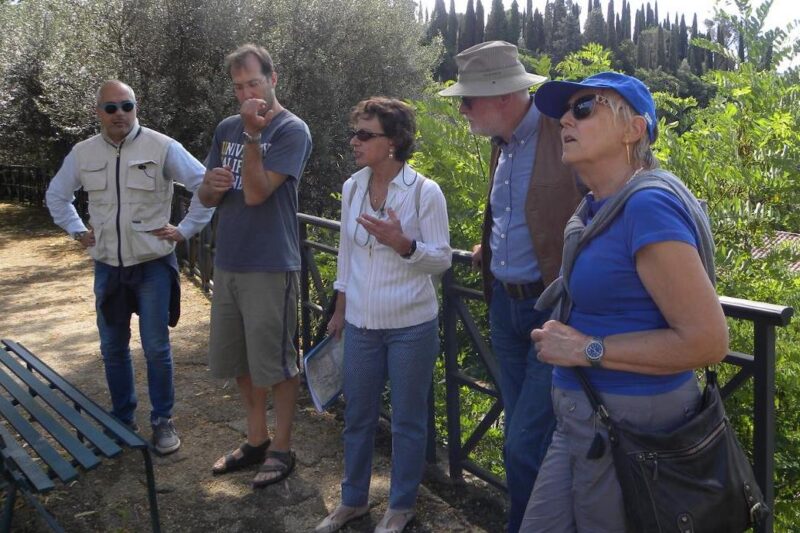
Telling Bolsena's thousand-year history through dedicated guided tours means giving the town back to its people and helping visitors discover our remarkable cultural heritage.
9:00 AM / 7:00 PM