Santa Cristina District
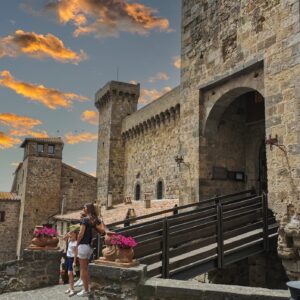
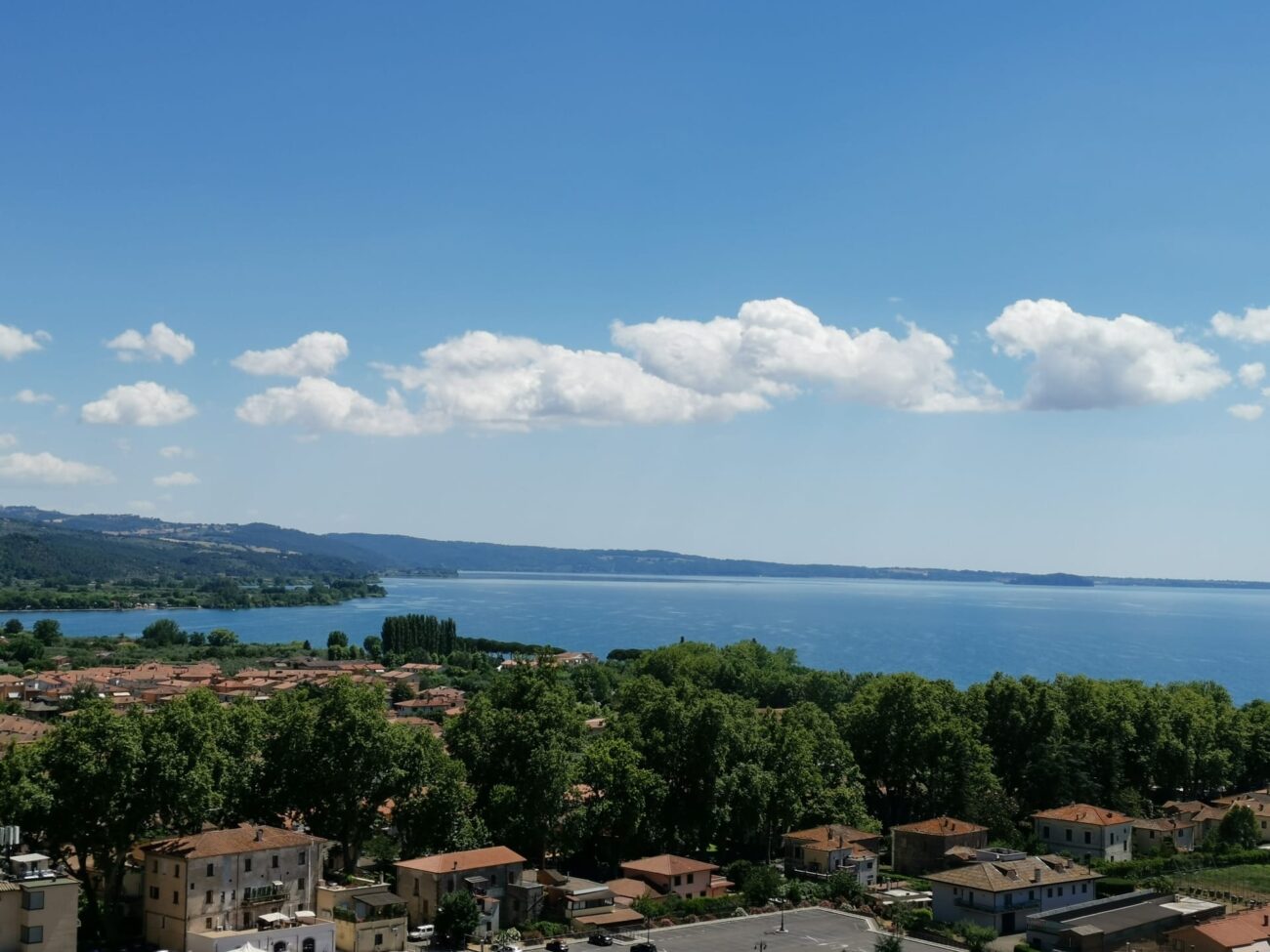
The Santa Cristina district in Bolsena is the oldest and most central neighborhood of the city, known as the heart of Bolsena's religious and historical life.
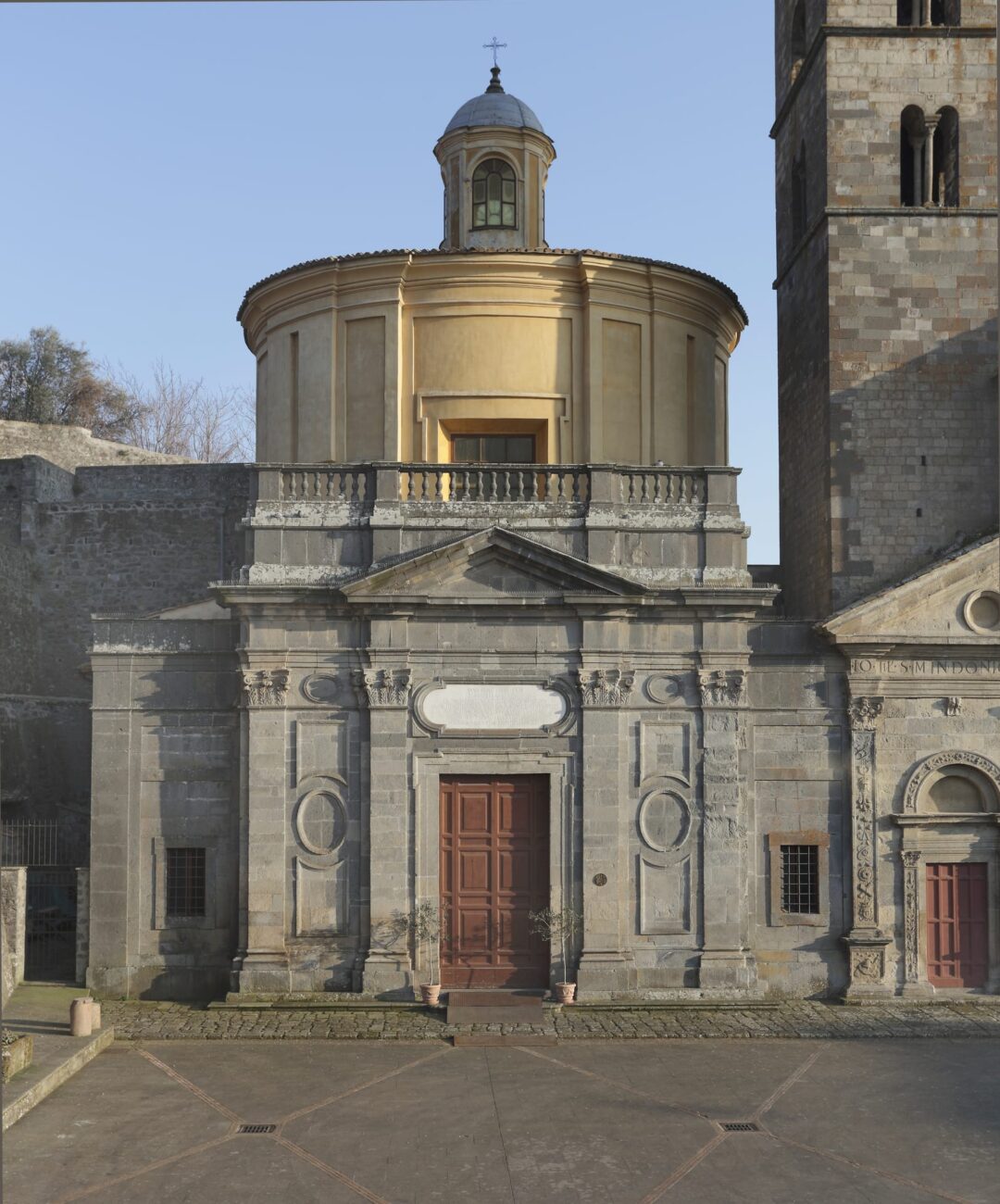
It takes its name from the Basilica of the same name, site of the Eucharistic miracle of 1263 and burial place of the martyr. The district includes the catacombs, the basilica, the house of the miracle and a vast residential area, making it the most extensive and populous in the city.
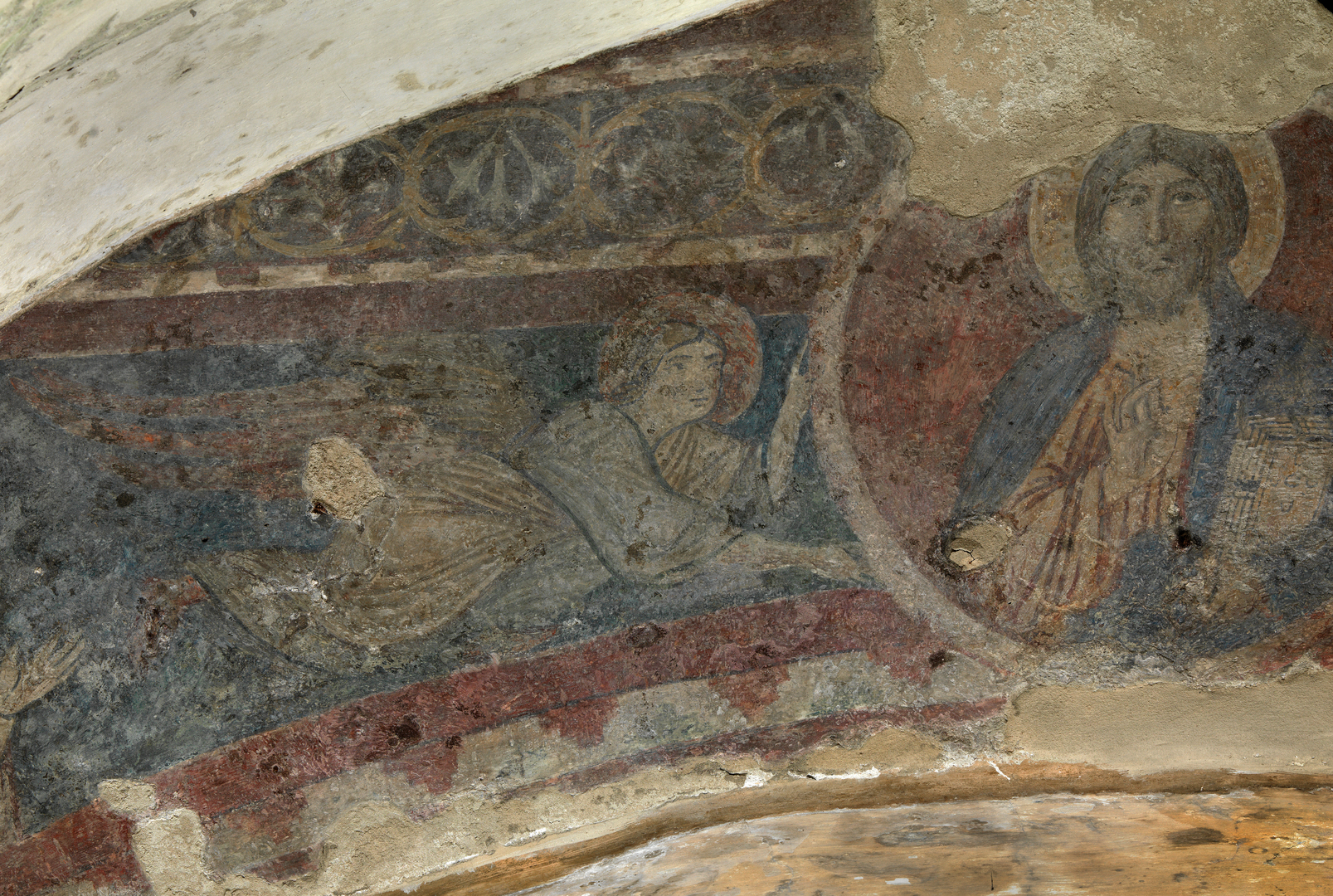
The Grotto of Santa Cristina in Bolsena preserves the most ancient memory of the saint’s cult. Just outside the vestibule and looking up toward the great arch, you can make out a 13th-century fresco, which reemerged in 1963: within it you can glimpse a Christ as judge, two angels supporting the luminous mandorla and, beside them, a holy bishop and a crowned saint, probably Cristina herself.
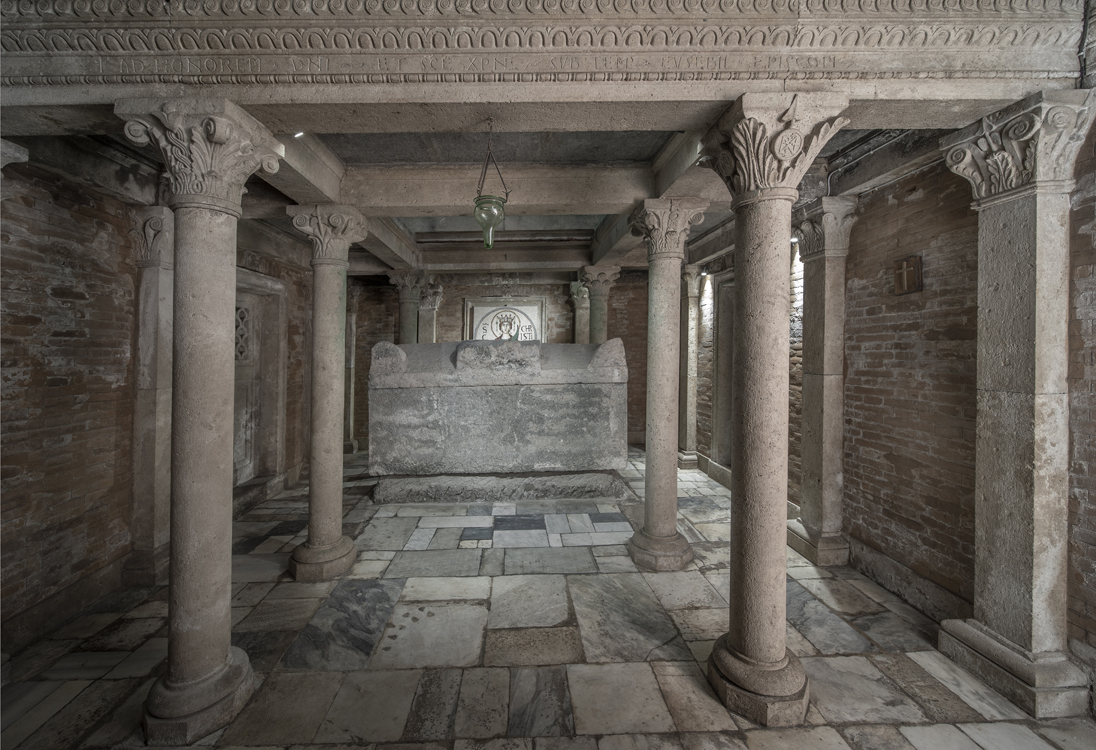
The underground basilica, created from the ancient early Christian catacombs, has always been considered the place where the martyr was buried. It was built by excavating the volcanic rock of the hill and dismantling part of the necropolis. In 1880, excavations under the 15th-century altar brought to light a large medieval sarcophagus in lava stone, inside which was preserved a Roman marble urn with a Latin inscription commemorating the relics of Saint Cristina. Beside the bones, a 10th-century silver coin was also found, testimony to the long-standing cult linked to the saint.
Research confirmed that here existed a tomb venerated since the 5th century. It’s believed that in the 11th century, perhaps thanks to Matilda of Canossa, the place was monumentalized with the construction of the underground basilica, the arrangement of the relics and the subsequent building of the great Romanesque church above, probably erected on the ancient Temple of Apollo.
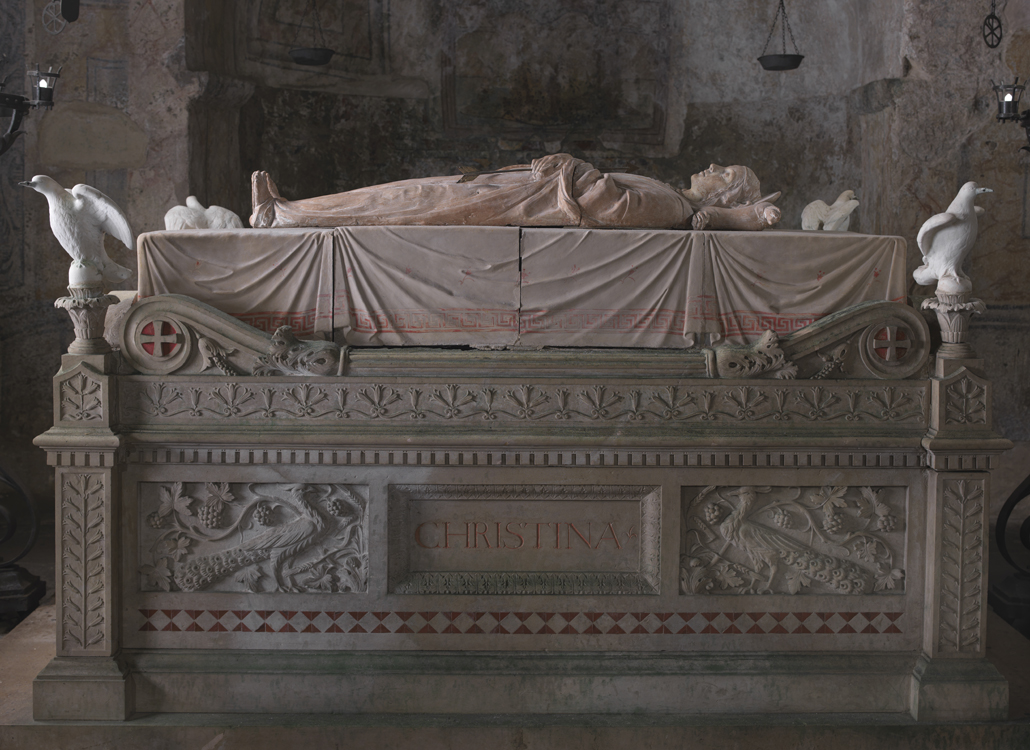
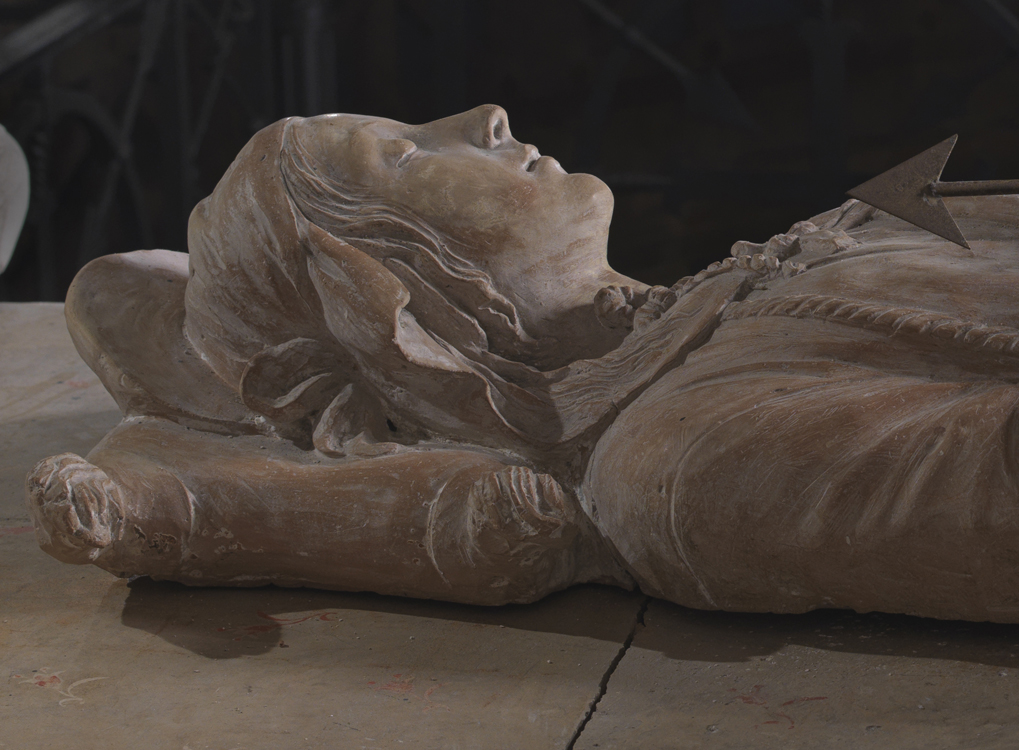
The current layout of the grotto dates back to post-1880 restorations, which modified the original arrangement and moved the majolica tabernacle by Benedetto Buglioni, once located here. His famous terracotta statue depicting Saint Cristina lying down, with the arrow and millstone of martyrdom in her hands, is now in the underground basilica, where the saint appears serene in eternal sleep.
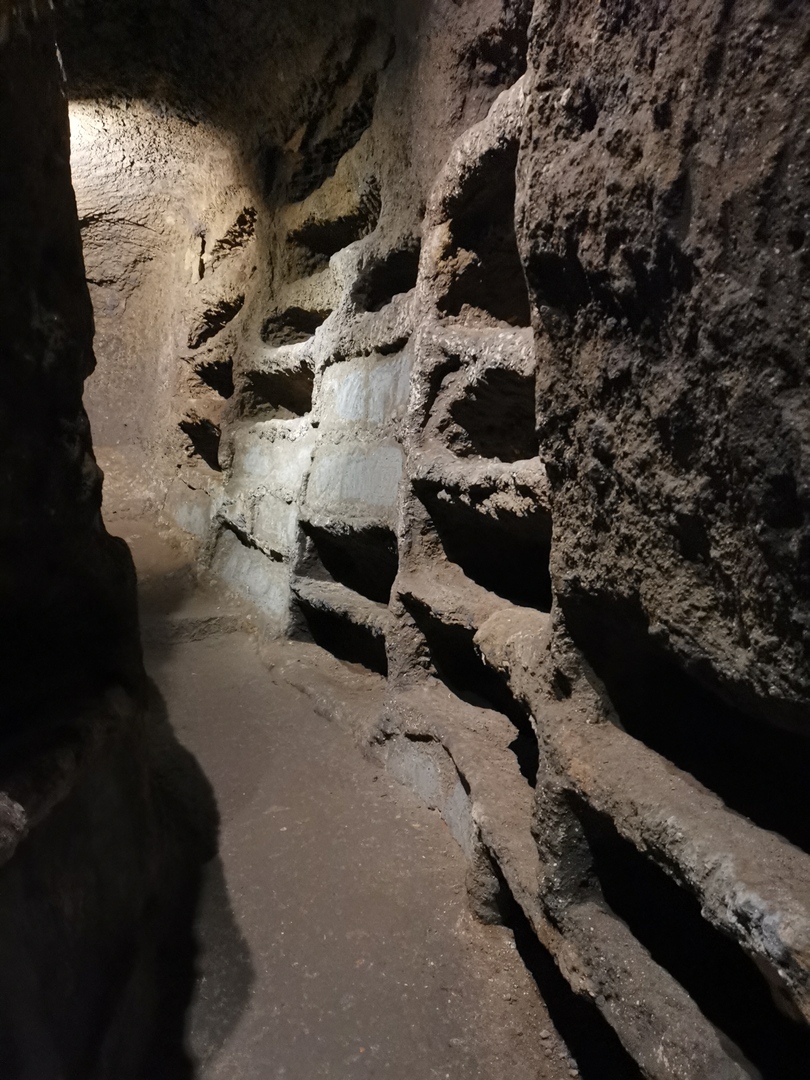
Going down the stairs you reach the medieval sarcophagus and the entrance to the early Christian necropolis, one of the most important testimonies in Tuscia, reopened to the public in 1988.
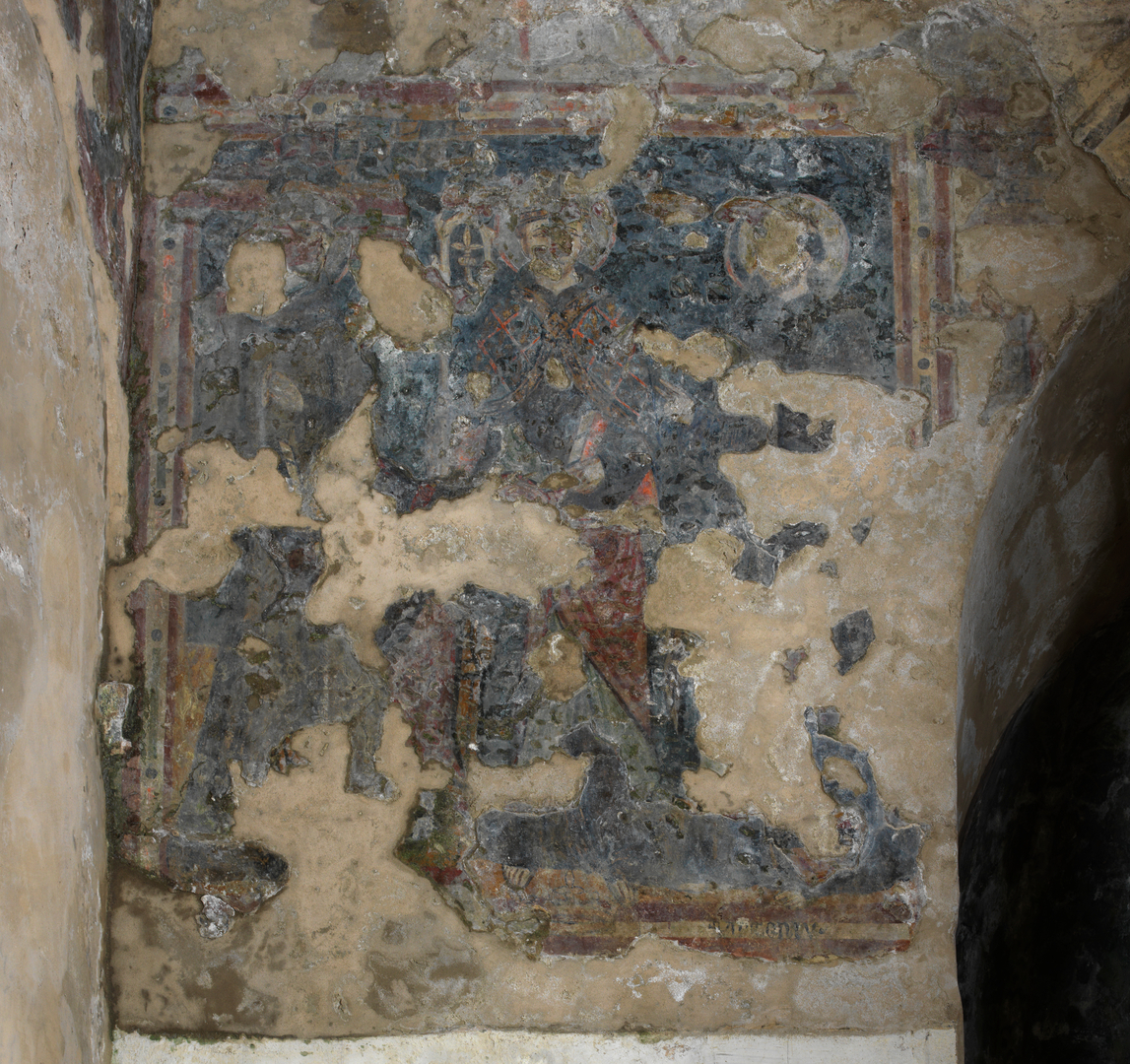
The catacomb, born in the 4th century along the ancient Via Cassia, preserves irregular burial niches belonging to families of different backgrounds and inscribed or painted Christian symbols. In one of these, a 4th-century female face is still visible, perhaps a young woman of high rank, next to an inscription dated 406. The left part of the necropolis is the richest in burials, because it’s near the martyr’s tomb. In a niche on the right side, the name CRESTINA is instead inscribed, a sign of how widespread among Bolsena’s Christians was the use of the name inspired by the saint.
Over time, the necropolis fell into oblivion, until its rediscovery in the 19th century. Today the Grotto and the catacomb form a single sacred complex, where history, faith and stone merge in a narrative that spans the centuries.
Plan Your Visit

Storyteller of the beauty, art, history and culture of Lake Bolsena and its surroundings, territories where I grew up and which I can share with the professionalism and passion of a local tour guide.
9:00 AM / 7:00 PM
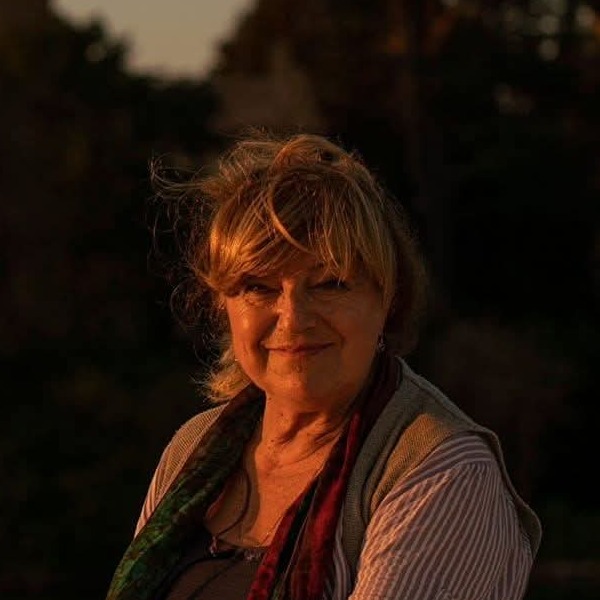
Telling the story of this land is not just about unveiling secrets and frescoes, it is about returning the light that this lake and this town give me every day, with a devotion that transcends time.
9:00 AM / 7:00 PM

My teaching profession has refined my ability to communicate. You cannot teach or illustrate art and creation without sharing a passion for beauty with others. A guide is not a book—it is the synthesis of all books and meaningful experiences from which they have drawn their knowledge, in order to share history and stories with everyone.
9:00 AM / 7:00 PM
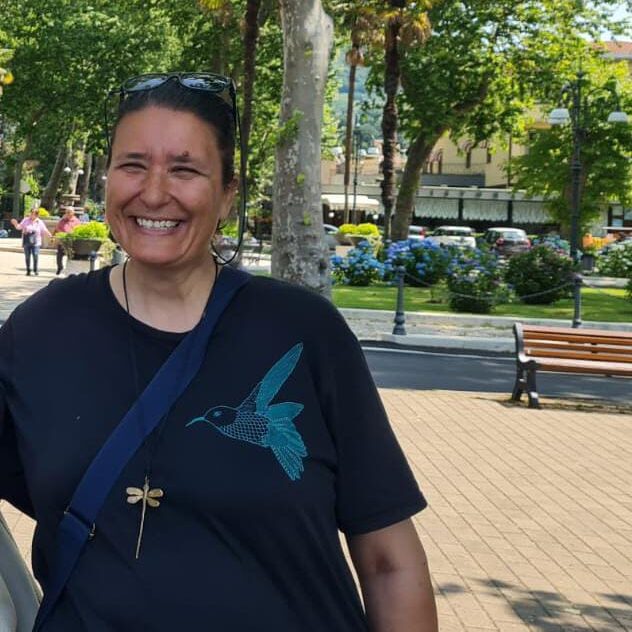
I believe being an ambassador for the place where you were born is a great privilege. Leading Italian and international visitors through the story of Bolsena's artistic, natural and cultural wonders is a stimulating experience that enriches your own knowledge while sharing it with others.
9:00 AM / 7:00 PM
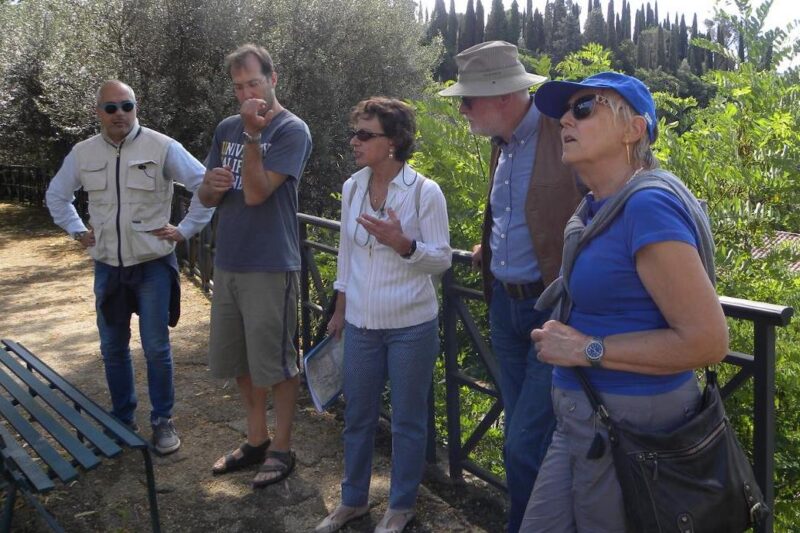
Telling Bolsena's thousand-year history through dedicated guided tours means giving the town back to its people and helping visitors discover our remarkable cultural heritage.
9:00 AM / 7:00 PM